IFRS 16 International Lease Accounting Standard
Complete right-of-use model support. Measurement, remeasurement triggers, and full IFRS 16 disclosures - ready for international reporting.
What is IFRS 16?
IFRS 16, issued by the International Accounting Standards Board (IASB), establishes a single lessee accounting model requiring lessees to recognize assets and liabilities for all leases with terms longer than 12 months. It replaced IAS 17.
Key facts
- Issued by
- IASB
- Applies to
- IFRS entities with lease contracts
- Effective since
- January 2019
- Replaces
- IAS 17 (Leases)
Implementation Timeline
-
Assessment
Review your lease portfolio and determine scope.
-
Configuration
Set up classification rules and posting groups.
-
Data Migration
Import lease data from spreadsheets or legacy systems.
-
Validation
Review calculations and generate test reports.
-
Go Live
Start posting journal entries and generating disclosures.
IFRS 16 Key Capabilities
-

Compliance & Disclosure Reporting
Built-in IFRS 16, FRS 102 and ASC 842 disclosures, amortization schedules, and maturity analysis.
-
Lease Agreement Management
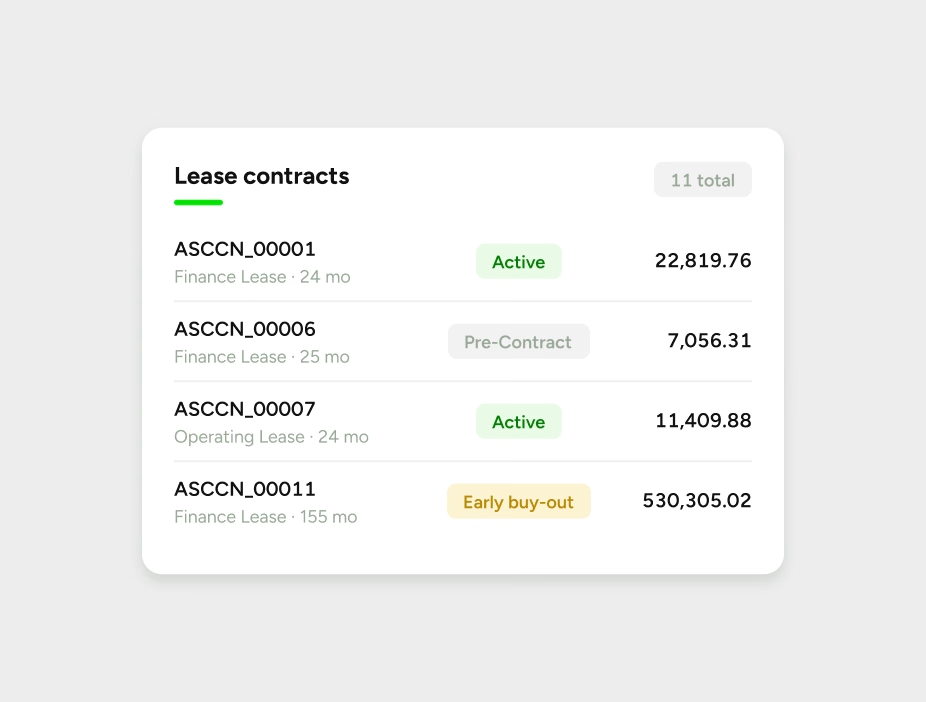
Manage all lease details in one place - vendors, dates, schedules, and assets. Full lifecycle workflow from pre-contract to expiration.
-
Automated Lease Schedule Calculation
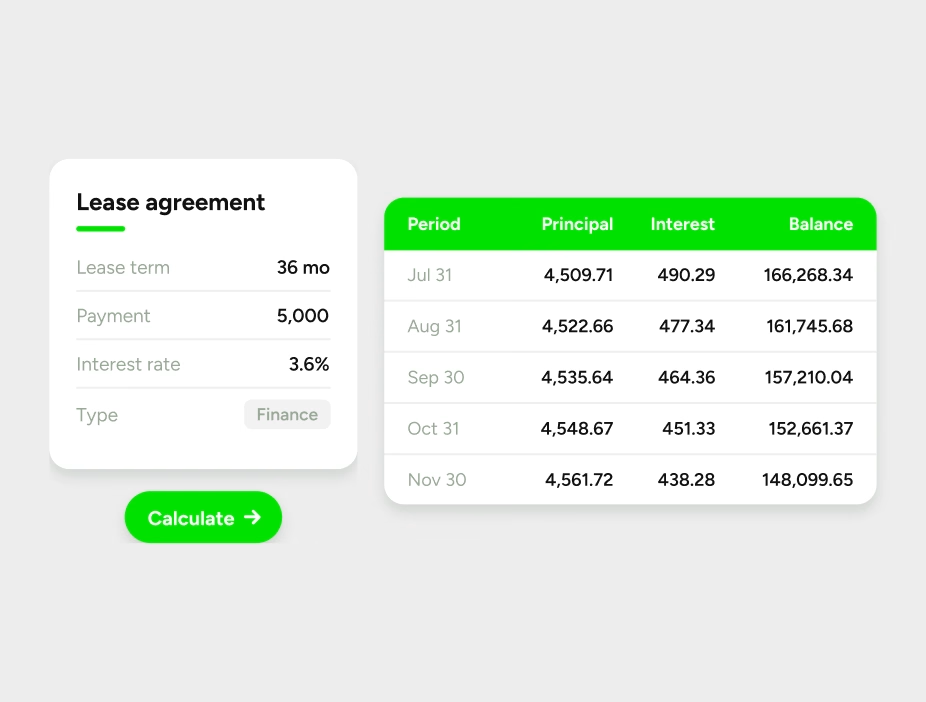
Automatically calculate NPV with principal and interest split. Support advance payments and flexible payment schedules.
-
Modifications & Remeasurements
Create new schedule versions when lease terms change, with remeasurement effects automatically posted to the general ledger.
-
Lease Closure & Early Termination
Close out leases with full balance reconciliation. Manage early terminations and buy-outs, and automatically dispose of the Right-of-Use Asset once the lease liability reaches zero in Business Central.
-
Automated Journal Entries & Accruals
Post accruals, payments, and interest in batch with one click, and rely on built-in reversals and error tracking to stay in control.



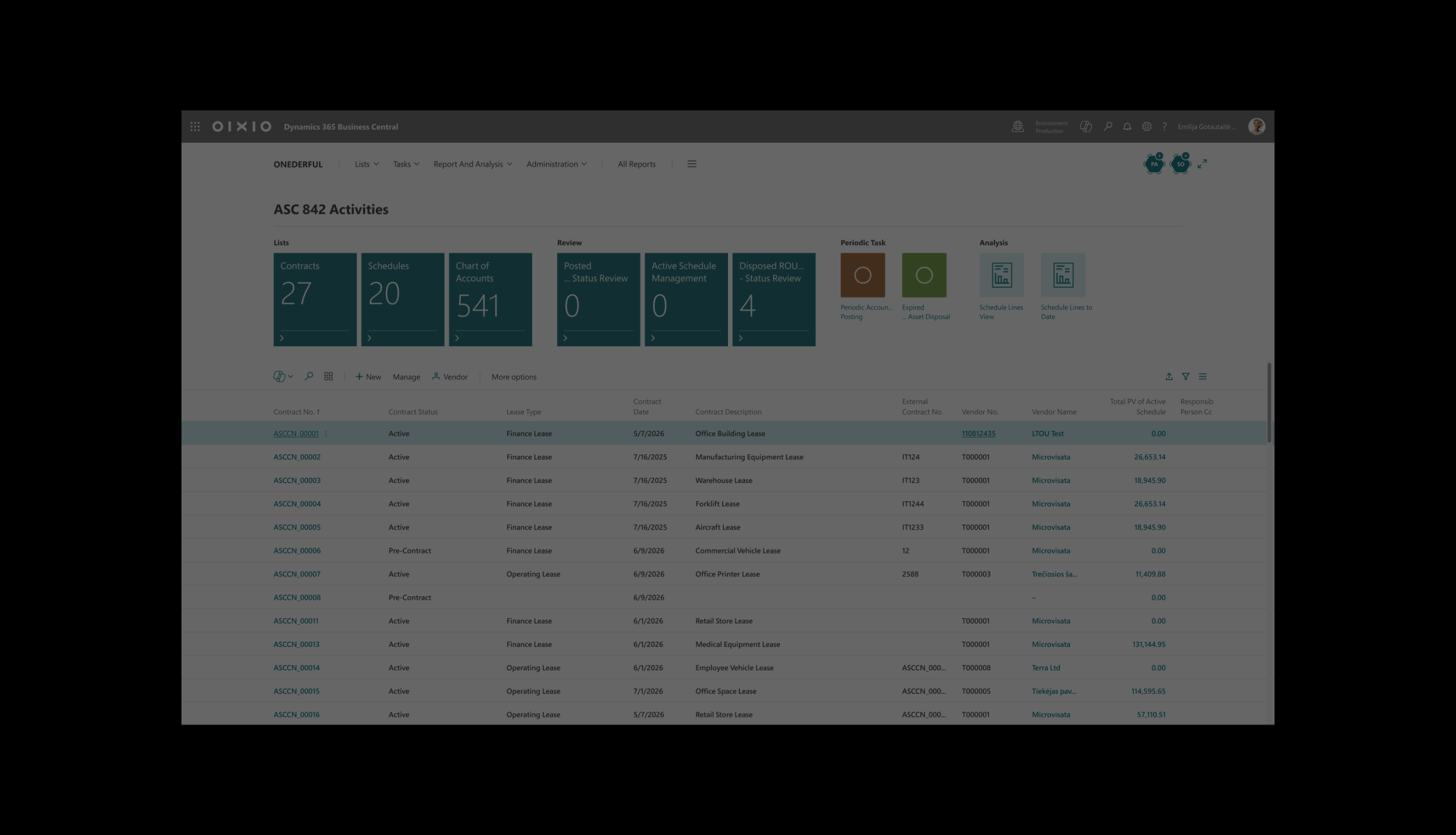
See Onederful in action
IFRS 16 frequently asked questions
-
IFRS 16 is the international lease accounting standard issued by the International Accounting Standards Board (IASB), which defines how companies recognize and report leases in their financial statements. It replaced IAS 17 and applies to organizations reporting under IFRS. The standard introduces a single lessee accounting model, requiring most leases to be recognized on the balance sheet as a Right-of-Use (ROU) asset and a lease liability for lease terms longer than 12 months. In practice, IFRS 16 is about making lease commitments fully visible - giving finance teams a clearer view of their obligations and better control over their lease portfolio. Applied correctly, it helps organizations level up financial transparency and stay compliant with confidence.
-
IFRS 16 became effective for annual reporting periods beginning on or after January 1, 2019, with earlier adoption permitted under certain conditions. In practice, this means most organizations reporting under IFRS have already transitioned to IFRS 16 and are now focused on maintaining accurate lease data and ongoing compliance rather than initial adoption.
-
IFRS 16 applies to all organizations that prepare financial statements under International Financial Reporting Standards (IFRS), including public companies, private companies, and multinational groups. In practice, this includes companies operating in jurisdictions where IFRS is required (such as many EU countries), as well as subsidiaries of global groups that report under IFRS. For finance teams, IFRS 16 is not optional - if your organization reports under IFRS and enters into lease agreements, you are required to apply the standard and maintain ongoing compliance.
-
Lease accounting is the process of identifying lease contracts and recognizing the related Right-of-Use (ROU) assets and lease liabilities in financial statements. Under ASC 842 and IFRS 16, most leases are recorded on the balance sheet, reflecting both the right to use an asset and the obligation to make future lease payments. In practice, lease accounting turns lease data into structured, audit-ready reporting - applying consistent calculations, tracking changes over time, and ensuring that lease commitments are fully visible. Done right, it helps finance teams stay in control of their lease portfolio and maintain compliance with confidence.
-
A right-of-use (ROU) asset represents a company’s right to use a leased asset - such as property, equipment, or vehicles - over the lease term. It reflects the economic benefit of using an asset without owning it. In practice, the ROU asset is the “asset side” of a lease: it shows that the company controls and uses the asset during the contract period, while a corresponding lease liability represents the obligation to make payments. Under ASC 842 and IFRS 16, ROU assets are recognized on the balance sheet for most leases, making lease commitments more visible and easier to track over time.
-
A lease liability represents a company’s obligation to make future lease payments over the term of a lease agreement. It reflects what the company is required to pay for the right to use a leased asset. In practice, the lease liability is the “liability side” of a lease - it is typically measured as the present value of future lease payments, calculated at the start of the lease and updated over time as payments are made. Under ASC 842 and IFRS 16, the lease liability is recognized on the balance sheet together with a corresponding Right-of-Use (ROU) asset, making a company’s lease commitments more visible and easier to manage.
-
Under IFRS 16, short-term leases - defined as leases with a term of 12 months or less and no purchase option - can qualify for an exemption from balance sheet recognition. If this exemption is applied, companies do not recognize a Right-of-Use (ROU) asset or a lease liability. Instead, lease payments are recorded as an expense, typically on a straight-line basis over the lease term. In practice, this allows finance teams to simplify accounting for short-duration contracts, while still applying full IFRS 16 requirements to longer-term leases.
-
Under IFRS 16, almost all leases must be recognized on the balance sheet as a Right-of-Use (ROU) asset and a lease liability. However, there are two key exceptions: Short-term leases (12 months or less) Leases of low-value assets (e.g., small equipment or devices) If these exemptions are applied, companies can expense lease payments instead of recognizing them on the balance sheet. In practice, this means IFRS 16 follows a “recognize almost everything” approach, with limited relief for leases that are short in duration or immaterial in value.
-
ASC 842, IFRS 16, and FRS 102 are lease accounting standards, but they differ in how leases are classified and presented in financial statements. ASC 842 (US GAAP) Requires most leases to be recognized on the balance sheet, but keeps two classifications - operating and finance leases - with different expense presentation. IFRS 16 (international standard) Uses a single model for lessees, where almost all leases are treated like finance leases, combining depreciation and interest rather than a single lease expense. FRS 102 (UK GAAP) Still follows an older approach similar to previous standards, where operating leases can remain off the balance sheet and are typically expensed as incurred. In practice, all three standards aim to reflect lease obligations more transparently, but ASC 842 and IFRS 16 bring most leases onto the balance sheet, while FRS 102 remains less strict in this regard.
Looking for ASC 842 or FRS 102?
Manage ASC 842 or FRS 102 leases with the same confidence - all in Business Central.
-
ASC 842
Full compliance with US GAAP lease accounting. Automatic lease classification, discount rate management, modification tracking, and disclosure reports - all generated directly inside Business Central.
-
FRS 102
Full FRS 102 lease accounting support inside Business Central. Recognition, measurement, remeasurement, and disclosure requirements - automated and audit-ready for UK and Irish reporting.